Small Business Storage Solutions in California
Most small businesses in central California don't fail for lack of customers. They get squeezed by overhead, and a big chunk of that overhead is space they barely use. Renting a warehouse bay or a second commercial unit to hold off-season inventory, archived files, or a contractor's gear means signing a multi-year lease and paying for square footage twelve months a year, whether you need it or not.
That math is why so many owners in Madera, Reedley, and Lemoore use self storage instead. You pay month to month, scale up or down as the season turns, and skip the triple-net charges, the insurance riders, and the build-out costs that come with a commercial lease. This guide walks through where storage actually earns its keep for a business, how it compares to leasing, and the add-on services that turn a storage unit into a working back office.
What Self Storage Costs a Business Versus a Commercial Lease
Here's the comparison that matters most. A small commercial or light-industrial space in the central valley typically rents at a monthly rate per square foot, plus common-area maintenance, plus a security deposit, plus a one to three year term you can't walk away from. Even a modest 1,000 square foot bay locks you into a serious annual commitment before you've stocked a single shelf.
A self storage unit flips that. There's no long-term contract, so you rent the space for the four months you need seasonal stock held and release it the rest of the year. There's no build-out, no separate utility account, and no commercial insurance minimum. For a business that needs overflow room rather than a storefront or a production floor, storage often covers the same job for a fraction of the yearly outlay.
The break-even logic is simple: if you'd use a leased space for storage rather than for serving customers or making product, you're overpaying. Storage gives you the square footage without the obligations attached to commercial real estate.
Seven Ways Small Businesses Use Storage Units
Storage isn't one use case, it's a dozen. These are the patterns we see most often across the three facilities.
1. Inventory Overflow
Retail and online sellers rarely run out of customers before they run out of shelf space. When a bulk order arrives or a supplier offers a volume discount, a storage unit gives you somewhere to put the extra cases without renting a bigger shop. You buy in quantity, save on per-unit cost, and pull stock forward as the floor empties.
2. Seasonal Stock
A garden center holds patio furniture through winter, a fireworks vendor holds product between July and New Year, a tax preparer holds folding desks and signage for ten months. Seasonal businesses pay for space they only touch part of the year if they lease. With month-to-month storage, you rent during the off-season and walk away the rest.
3. Document Archiving
California businesses are required to keep tax records, employment files, and signed contracts for years. A climate-controlled unit keeps paper from yellowing, curling, or growing mildew in valley heat, and it clears the boxes out of your office closet. For medical, legal, and accounting offices, this is often the first reason they call.
4. Equipment and Tools
Landscapers, HVAC techs, photographers, and event companies all own gear that's too valuable to leave in a truck overnight and too bulky for a home garage. A secured unit becomes the base of operations: load out in the morning, return the equipment at night, and keep it behind a gate and a camera instead of in your driveway.
5. E-commerce Fulfillment Staging
Online sellers who pack and ship themselves need a spot to receive inbound shipments, stage outgoing orders, and store packing supplies. A drive-up unit lets a delivery truck pull right to the door, and the smartphone-enabled keyless entry means a part-time packer can get in without you handing over keys.
6. Contractor Tool and Material Storage
General contractors and the trades cycle through job sites, and hauling lumber, fixtures, and power tools home every night is a waste of daylight. A centrally located unit keeps materials staged between jobs and protects expensive tools from theft, which on an active site is a constant worry.
7. Farm and Ag Supply Storage
This is central valley specific. Growers, equipment dealers, and ag-supply resellers around Madera and Reedley need clean, dry space for seed, parts, packaging, and small implements that shouldn't sit out in the field or bake in an open barn. A weather-protected unit keeps inputs in good shape through the season.
When You Need Warehouse-Level Space
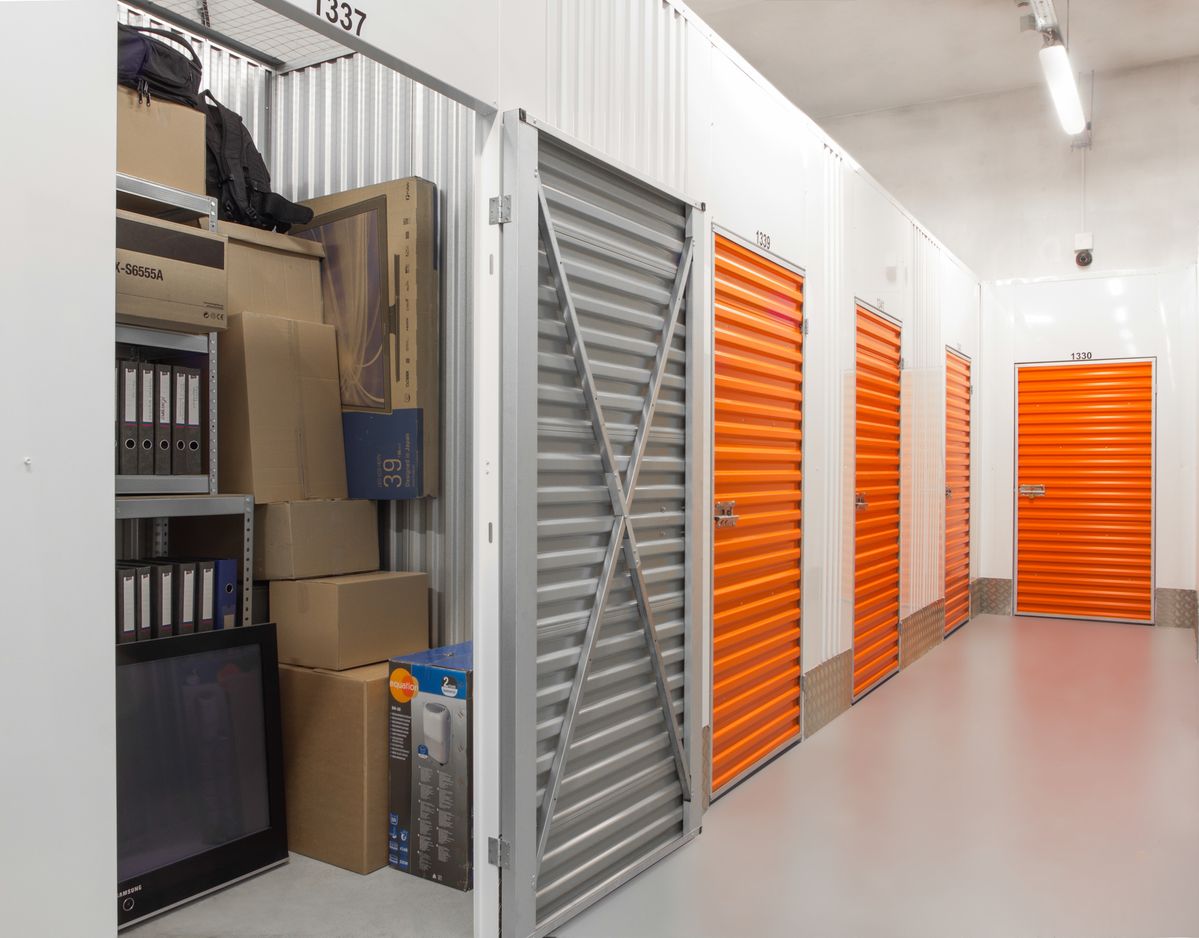
Standard units cover overflow and archiving fine. But businesses holding pallets, large machinery, full furniture lines, or a season's worth of inventory need real volume. Our extra large storage units for business give you warehouse-style room without a warehouse lease, with high ceilings and drive-up access so a forklift or hand truck can work the space.
If you're weighing how much room a growing inventory really needs, the breakdown of large units for business inventory covers how flex sizing lets you take more square footage during peak months and scale back when stock thins out. That flexibility is the part a fixed commercial lease can't match.
Business Mailbox Rentals as an Add-On
A storage unit handles your stuff. A mailbox handles your front door. For home-based businesses, online sellers, and consultants, a private street address looks more professional than a P.O. box and keeps your home address off public filings, packaging, and your website.
Our business mailbox rentals give you a real street address for receiving packages from any carrier, not just the postal service, which matters when a supplier ships by a courier that won't deliver to a P.O. box. Pair it with a storage unit and you've got a receiving address and a place to put what arrives, all at one location.
Security Features Businesses Actually Need
When you're storing inventory you've already paid for or tools you can't work without, security stops being a nice-to-have. The features that matter for a business:
- Gated access with individual entry codes, so you know who came in and when, instead of a shared key.
- Smartphone-enabled keyless entry, which lets you grant or revoke access for staff and contractors without re-keying anything.
- 24/7 access, because a contractor loading out at 5 a.m. or an online seller fulfilling a late order can't wait for business hours.
- Climate control, which protects electronics, documents, and temperature-sensitive product from valley heat that regularly pushes past 100 degrees in summer.
- On-site cameras and surveillance, covering the gate, drive aisles, and unit rows.
A Storage Hub, Not Just a Unit
What separates a storage facility from a back office for a small business is the services around the unit. Beyond mailboxes, every location keeps an on-site retail center stocked with boxes, tape, and packing supplies, so you're not making a hardware-store run mid-pack. Rent a unit and you also get a complimentary in-town moving van to haul the first load.
The amenity most businesses don't expect is the on-site conference facility. If you run a home-based or storage-based business, you don't always have a professional place to meet a client, sign a contract, or hold a team huddle. Having a real room to book on the same property you already use turns a self-storage stop into a place you can actually do business.
Three Locations, Three Business Communities
The three facilities serve different local economies, and the storage needs follow.
Madera sits in the heart of ag and food processing country, so demand here leans toward farm supply, equipment, and packaging storage, plus overflow for the wineries and retailers along the corridor. If you're comparing units in town, the Madera self storage options cover both drive-up and climate-controlled space.
Reedley is fruit-belt territory, packed with growers, packers, and family-run shops that need seasonal and ag-adjacent storage timed to the harvest calendar.
Lemoore blends a military-connected community near NAS Lemoore with retail and service businesses, so you see a mix of inventory, document, and equipment storage. For a closer look at how local owners use it, see our guide to storage for small businesses in Lemoore.
Frequently Asked Questions
Is self storage cheaper than leasing commercial space for a business?
For storage purposes, almost always. A commercial lease ties you to a multi-year term plus maintenance charges, deposits, and utilities. A storage unit is month to month with none of that overhead, so if you'd use the leased space mainly to hold inventory or equipment rather than serve customers, storage usually costs far less per year.
Can I run my business out of a storage unit?
You can use a unit to store inventory, stage e-commerce orders, and house equipment, and you can pair it with a mailbox for a business address and the conference facility for client meetings. Units themselves aren't built for staffing a workspace or retail sales, but as a logistics and storage base they handle a lot of day-to-day operations.
What size unit do I need for business inventory?
It depends on volume. Small overflow and document archiving fit in standard units, while pallets, furniture lines, or a full season of stock call for flex extra large units with high ceilings and drive-up access. Renting month to month means you can start smaller and size up as you grow rather than guessing on a lease.
Can my employees or contractors access the unit?
Yes. Smartphone-enabled keyless entry lets you grant access to staff and contractors and revoke it when someone leaves, without re-keying locks or handing out physical keys. Gated entry with individual codes also gives you a record of who entered and when.
Is climate control worth it for stored inventory?
In the central valley, often yes. Summer heat regularly tops 100 degrees, which can warp, melt, or degrade electronics, cosmetics, documents, and adhesives. If your stock is temperature-sensitive, climate-controlled space protects the value you've already paid for.
Find the Right Fit for Your Business
Whether you need overflow room for a busy season, a secure base for tools, a mailbox and a meeting room, or warehouse-level space for inventory, there's a setup that costs less than a lease and flexes with your business. Reach out to the Madera, Reedley, or Lemoore facility to talk through sizes and pricing, and start treating space as something you scale, not something you're stuck with.