
Packing Tips for Self-Storage in California: A Central Valley Guide to Heat, Smoke, and Dust
Why California Changes How You Pack
You saw heat, smoke, and dust in the title—here’s why it matters here in the Central Valley. Summer brings triple-digit heat—Fresno averages 30+ days over 100°F—so candles sag, adhesives ooze, and vinyl warps. Wildfire ash and PM2.5 (ultra-fine particles under 2.5 microns) sneak into fabrics and electronics. Harvest kicks up gritty dust; winter tule fog adds moisture. Even small quakes can nudge stacks. Your packing has to anticipate all of it.
Real life doesn’t pause: you’re grabbing holiday bins after work, dropping inventory between jobs, or swinging by after a kid’s game. Generic advice like “wrap everything in plastic” backfires here—plastic traps heat and moisture, baking mattresses and fogging electronics. Soft cardboard breathes dust; loose lids invite smoke. That’s why we favor gasketed totes, breathable covers, and a layout that lets you find the bin fast with 24/7 access. Ready to see what’s at stake next?
California Storage Reality: What’s at Stake
You asked what’s at stake—here’s the real picture we see daily. Students rotating between semesters, military families from NAS Lemoore (Naval Air Station Lemoore) on orders, families between rentals, and small businesses staging inventory all use storage. The items? TVs, gaming consoles, glassware, guitars, photo albums, toddler gear, patio cushions, and seasonal décor. In Madera, Reedley, and Lemoore, triple-digit summers, smoky harvest weeks, and winter fog change the rules—especially for electronics and anything wood, leather, or paper.
Coast-to-Valley moves hit different. If you’re coming from coastal humidity to the Central Valley, items that felt fine in 70°F can face 100°F interiors by July. Summer moves compress into mornings and evenings to beat heat; fall brings wildfire smoke and ash; winter brings condensation during cold snaps and tule fog (dense Valley fog). Business cycles matter too: ag crews and e‑commerce sellers surge before harvest and holidays—so layout and labeling must support fast pulls and frequent night access.
The cost of guessing wrong is real. Heat softens adhesives, warps vinyl records, and cracks wood or leather; a $400 TV or a wedding album is hard to replace. Dust and ash embed in fabrics and fan ports, causing odors and failures. Moisture and fog encourage mildew if you trap air in plastic. And tremors shift top-heavy stacks. Next, we’ll call out the seven mistakes that create this damage.
Seven California Packing Mistakes Costing You Time, Money, and Keepsakes
We see these missteps week after week in the Valley. They look small, but they ruin electronics, warp furniture, and waste hours. Fix them now, and your storage stays clean, accessible, and budget-friendly.
- Overpacking cardboard in heat invites failure—glue softens, walls bow, and bottom seams pop when unit temps climb past 90–100°F.
- Ignoring dust and ash lets Valley grit and wildfire residue creep through flaps and handles—seal seams or use gasketed totes to keep couches and linens clean.
- Storing electronics hot off the truck causes condensation when they cool—moisture on boards and screens leads to corrosion and failures.
- Plastic wrapping wood and fabrics traps humid air; in foggy zones or near the coast, that microclimate breeds mildew and stains.
- Stacking without quake planning creates tipping hazards—tall, top‑heavy piles with no straps or anti‑tip anchors can shift during tremors.
- Using random box sizes builds wobbly columns; gaps waste vertical space and make strapping impossible.
- Skipping inventory and labels guarantees lost bins, duplicate purchases, and frustrating midnight searches.
Why Generic Packing Tips Fail in California
National checklists assume mild temps and clean air. We don’t. “Wrap mattresses in plastic” sounds tidy until a 102°F afternoon bakes trapped moisture into mildew; use breathable covers instead. “Use any sturdy cardboard” ignores heat-softened glue and Valley dust; double‑wall boxes and taped seams survive summer and harvest. And “stack high to save space” forgets earthquakes—without shelves and straps, a small tremor can topple a tower. California requires dust seals, temperature buffering, and quake measures; the generic lists skip.
Another miss: “Drive-up for convenience.” In Madera or Reedley at 3 p.m. in July, a drive-up unit can feel like an oven. Sensitive items belong in climate control, or you move at dawn and dusk. “Just vacuum-bag clothes” crushes natural fibers during heat cycles; gasketed totes with cedar blocks work better. Finally, electronics need acclimation time—15–30 minutes in shade before sealing—so condensation doesn’t form. Our Central Valley conditions punish shortcuts; plan for heat, smoke, dust, fog, and the occasional shake.
That’s the gap: national lists don’t speak Central Valley. You need a simple system that filters every decision through heat, smoke, dust, moisture, and access. Up next, our seven-step California‑proof framework—unit choice, supplies, sealing, elevation, safety, and a retrieval-first layout you can set up in one visit.
The 7-Step California‑Proof Packing Framework
That gap ends now—here’s the seven-step filter we use in the Central Valley. Ready to stop guessing? Follow it to beat heat, smoke, dust, moisture, and small quakes while keeping 24/7 access fast.
Step 1: Audit & categorize — Flag heat/dust-sensitive items: electronics, wood/leather, photos/art, instruments, vinyl. Set aside prohibited materials (fuels, propane, pesticides, fireworks). Note scented items; no food. Decide now which bins need climate control.
Step 2: Right-size boxes — Choose uniform, double‑wall boxes (medium 18x18x16) for stable, strap-friendly columns. Keep boxes under 40 lb. Skip weak, mismatched boxes; heat softens glue and small quakes exploit gaps.
Step 3: Seal & buffer — Tape seams; reinforce bottoms. Use gasketed totes for linens. Add desiccants; cover furniture with blankets and breathable mattress covers. Skip full plastic wrap—it traps moisture and intensifies heat.
Step 4: Protect fragile — Double-wrap glass and ceramics; use dividers. Pad edges with foam or bubble. Place fragile boxes mid-shelf—never high. Strap shelves and add corner bumpers to reduce movement during small quakes.
Step 5: Electronics protocol — Back up drives, remove batteries, power down. Let devices acclimate 15–30 minutes in shade. Pack in original boxes if available, add desiccants, and label cords in zip bags.
Step 6: Label & inventory — Label two sides; add QR (quick response) codes linked to photos. Number bins and sketch a door map. Use facility Wi‑Fi (wireless internet) to update inventory for 24/7 grabs.
Step 7: Stack & secure — Build interlocking columns on pallets: heavy low, fragile mid, light high. Leave an 18–24 inch center aisle. Strap stacks, anchor shelves, and keep 18 inches clear of sprinklers.
Pro TipLeave 2–3 inches between walls and stacks so air circulates. Use breathable covers, not plastic, especially during tule fog or coastal humidity—plastic traps moisture and can turn summer heat into mildew.
Room-by-Room Playbooks for California-Proof Packing
Kitchen & Dining: Glassware, Appliances, Candles
Building on airflow and breathable covers, we pack kitchens for triple‑digit heat, smoky weeks, and small quakes: stabilize fragile stacks, avoid heat‑trapping plastics, and seal against dust without suffocating wood, boards, or fabrics.
- Use dish dividers; label 'Fragile—Top'; place lower in stacks for quake stability.
- Drain and air‑dry small appliances; bag cords; avoid sealed plastic near the coast.
- Skip packing candles and cooking oils in summer heat; follow disposal rules for flammables.
- Pad glass tabletops with corrugated sheets and blankets to resist heat warping in transit.
- Use breathable wraps for wooden utensils and boards; avoid plastic that traps moisture.
Living Room & Media
Electronics hate dust and heat spikes, so we stage, seal, and elevate. Use climate control for long stays; otherwise, desiccants and sealed totes buy you time.
- Back up data; remove batteries; add desiccants and rigid corner protectors to boxes.
- Wrap TVs with foam edges; store upright on edge; keep off floor to control dust.
- Loosely cover sofas with breathable covers; avoid plastic that traps heat or moisture.
- Bundle remotes and cables in labeled pouches; photograph connections before packing components.
- Store vinyl records vertical with stiffeners; buffer with sleeves to reduce temperature swings.
Bedroom & Closet
Fabrics, mattresses, and leather need airflow, not plastic. In coastal or foggy spells, choose breathable covers and moisture absorbers to prevent mildew.
- Use breathable wardrobe boxes; add cedar blocks or moisture absorbers for protection.
- Avoid vacuum‑sealing natural fibers near the coast; allow light airflow to protect shape.
- Protect mattresses with vented covers; keep off concrete floors using pallets or risers.
- Stuff shoes with paper; avoid closed plastic bins in heat‑prone areas to reduce odor.
- Label seasonal clothing by month; stage quick‑access boxes for spring and fall grabs.
Garage & Outdoor Gear
Garages hide the tricky stuff. Think fuels, solvents, and dusty gear—pack safe, obey rules, and block grit with sealed totes and breathable bags where needed.
- Drain fuel; never store hazardous or flammable materials; review facility rules before loading.
- Clean and dry camping gear fully; shake out dust; pack in breathable bags.
- Disassemble tools; oil lightly; wrap blades; label weight so stacks stay safe.
- Use sturdy totes for heavy items; place low and toward the back.
- Rinse bikes and boards; protect bearings; avoid tight plastic wraps during heat.
Choose the Right Unit for California Conditions
Since bikes and boards need airflow, your unit choice should support that plan too. In the Central Valley, heat, wildfire dust, and tule fog shape everything. Drive-up speeds heavy loads; interior climate control protects sensitive gear. If you access weekly or at night, stairs and elevators matter. Next, we’ll call out when climate control is non‑negotiable.
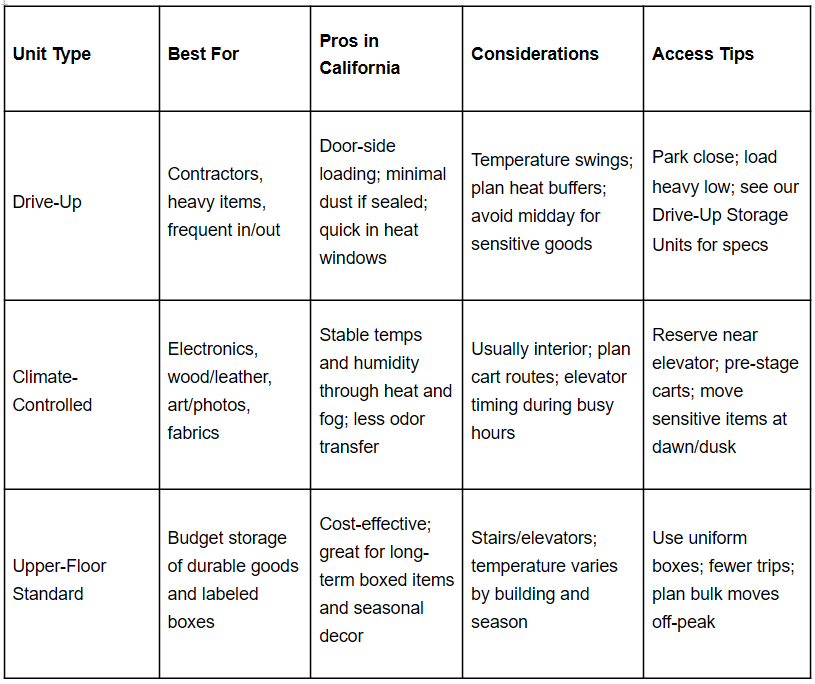
On first mention, link the exact phrase Drive-Up Storage Units. Use it once, then avoid repeating this link elsewhere.
Sensitive Items: When Climate Control Is Non‑Negotiable
So when is climate control non‑negotiable? Start with your most sensitive items: electronics, photos, art, vinyl records, musical instruments, and wood or leather furniture. Valley heat swings cook adhesives and warp finishes; coastal humidity and tule fog push moisture into paper and fabrics. Climate control stabilizes temperature and humidity, reduces odor transfer from smoke/ash, and keeps metals from sweating during cool-down. In plain terms, it prevents the warping, cracking, and mildew we see after a single bad heat wave.
Use climate control when storage overlaps July–September, lasts 30+ days, or includes adhesive‑based items (speakers, veneers, albums). A 100°F afternoon can push non‑climate interiors well above 90°F; finishes soften, glues creep, and records dish. For winter short‑term, moisture is the enemy—choose breathable covers plus desiccants, and still favor climate for instruments and photos. Quick rule: if you’d be upset finding a smoky smell or a hairline crack, buy the buffer. It’s cheaper than replacing a guitar or digitizing an album. Next, see how a Reedley family applied this during harvest.
Not sure? Our climate-controlled storage units keep temps steady and air filtered, ideal for electronics, photos, wood/leather, and vinyl—especially for Central Valley summers or any storage longer than a month.
Rule of Thumb: If an item costs more than one month of rent to replace, carries sentimental value, or you’re storing over summer or 60+ days, choose climate control. Spend a little now, avoid big replacements later.
How a Reedley Family Packed Right and Avoided Harvest-Season Damage
We said spending a little now beats big replacements—this Reedley family proved it during harvest. With triple‑digit afternoons and dusty evening breezes, they chose a climate‑controlled unit for a TV, vinyl records, a cedar chest, and kids’ beds. They used breathable mattress covers, gasketed totes, and desiccants; let electronics acclimate 20 minutes; then strapped metal shelving. Labels on two sides plus QR (quick response) photo inventory over our free Wi‑Fi (wireless internet) kept grab‑and‑go bins by the door.
Outcome? Zero dust inside totes, no warped finishes, and cooler, stable temps protected adhesives. They did after‑dinner drop‑offs using keyless 24/7 (any time) access, and pulled a labeled photo box in under five minutes for a weekend celebration. Lesson for you: climate + gasketed totes + a center aisle map beats heat, smoke, and harvest chaos every time.
Live nearby? Our climate‑controlled self storage units in Reedley, CA make this setup simple with sizing help, supplies, and keyless 24/7 access.Bottom line: zero damage, five‑minute retrievals, and calmer move days. If you’re facing Valley heat, smoke, or dust, copy their playbook—choose climate control, seal with gasketed totes, and map an aisle before the first box.
California Packing Supplies: Heat, Smoke, and Quake Ready
Copy that Reedley playbook? Here’s the California‑tuned supply list we use to keep dust out and heat at bay. Each item combats Valley realities—triple‑digit temps, wildfire smoke, farm dust, and small quakes—so your setup stays fast and damage‑free.
- Uniform heavy‑duty boxes labeled with stack rating; build tight, strap‑friendly columns that resist heat‑softened glue and minor quake wobble.
- Dish and glass dividers; isolate pieces so small tremors and hot‑day bumps don’t transfer force through the whole stack.
- Breathable furniture and mattress covers; protect from dust while allowing airflow, preventing trapped moisture during tule fog or coastal humidity.
- Corrugated sheets and corner guards; stiffen tabletops, frames, and art, resisting heat‑warp and edge impacts in tight truck turns.
- Painter’s tape, large labels, and bold markers for residue‑free, high‑visibility labeling on boxes, totes, and shelves.
- Moisture absorbers and desiccant packs inside electronics, photos, and document bins to control humidity swings and prevent mildew.
- Dust covers or stretch netting—not plastic wrap—so sofas and cushions breathe while blocking ash and farm dust.
- Moving blankets to insulate against hot‑truck surfaces, soften vibration during transport, and prevent scuffs on wood or leather.
- Pallets or risers lift boxes off concrete, improving airflow and reducing dust, condensation, and pest contact.
- Zip pouches for screws, bolts, and cables; label with room and item, then tape to the parent box.
- QR (quick response) codes and numbered inventory sheets or app templates; photo each bin for five‑minute retrievals using on‑site Wi‑Fi.
- Cart and hand‑truck plan: measure elevator cabs, door widths, and turns now to avoid stuck sofas at 9 p.m.
California-Smart Unit Layout for Speed and Safety
You measured elevator cabs, door widths, and turns—now let’s make the unit flow. This step-by-step layout speeds five‑minute retrievals and prevents tipping in small quakes. Follow these steps, and then we’ll cover safety rules.
Step 1: Sketch a map of zones (seasonal, fragile, heavy) with a center aisle at least 18–24 inches wide. Post the map inside the door.
Step 2: Build heavy, uniform base rows at the back; keep weight low and toward corners. Use shelves for vertical strength, not teetering stacks.
Step 3: Place quick-access boxes front-right and at eye level. Label two sides and the top; use bright markers so you can spot them at night.
Step 4: Interlock stacks like bricks; mix box orientations slightly to lock columns. Strap tall sections to shelves to prevent tipping during tremors.
Step 5: Elevate everything on pallets or risers; keep 1–2 inches off walls for airflow and dust control. Never block vents or sprinklers.
Step 6: Hang a printed inventory and door map near the latch; mirror it on your phone with photos. Update it after every visit for five‑minute grabs.
California Safety, Compliance, and Quake‑Smart Storage Rules
With your door map posted and inventory updated, let’s lock in safety. California fire code, pests, smoke, and small quakes—these rules keep you compliant and protected. Follow them now; next, we’ll plan your move‑in timeline.
- No fuels, paint thinners, fireworks, or hazardous chemicals—required by California fire code.
- No food or pet food—pests follow scent; if unavoidable, use tightly sealed gasketed bins.
- Remove propane from grills; store tanks per local rules at approved locations—never inside any unit.
- Use breathable covers on mattresses and furniture; avoid tight plastic wrap in coastal or tule‑fog conditions.
- Anchor tall furniture and appliances with ratchet straps; keep heavy items low and toward corners for quake stability.
- Leave an 18–24 inch center aisle; never block the door or emergency access paths.
- Place desiccant packs in electronics and photo bins; check and replace them each season.
- Confirm facility rules for batteries and e‑waste (electronics recycling); follow California disposal laws and manufacturer guidance.
Move-In Timeline: Madera, Reedley, and Lemoore
With safety and facility rules confirmed, let’s turn the plan into a move‑in schedule tuned for Central Valley heat, smoky afternoons, and traffic—so you finish before noon or after dusk. Ready to reserve next? Good.
Hour 0: 6–7 a.m. pickup—beat heat and traffic; confirm gate code or keyless app access; check unit number for Madera, Reedley, or Lemoore.
Hour 1: Stage labeled zones at home; load heavy base items first; strap shelves and pallets; keep climate‑sensitive boxes separate for interior trips.
Hour 2: Drive to the facility; park in shade if possible; text crew the code; hydrate and sunscreen; use carts to limit hot truck time.
Hour 3: Lay pallets; build heavy base rows at the back; create 18–24 inch center aisle; move climate‑sensitive boxes to climate‑controlled interior first.
Hour 4: Finish interlocking stacks; strap tall sections; hang the door map and inventory; snap photos; scan QR labels using on‑site Wi‑Fi.
Hour 5: Final sweep; check sprinklers/vents clear; close aisle; lock with a disc lock; set calendar reminders for monthly check‑ins and desiccant changes.
Ready to Pack Smarter, California?
You’ve done the final sweep and locked up—ready for the next step? Reserve your climate‑controlled space with 24/7 access and keyless entry in Madera, Reedley, or Lemoore. Call our Madera team at 559-664-3910 for a quick unit sizing and packing consult—most calls take 5 minutes.
Prefer online? Reserve in minutes and move in today—no key handoffs, just your phone. We’ll help you choose shelves, totes, and a layout that fits your stuff and your schedule. Whether it’s a late-night pickup or a weekend drop, our local team’s got you.
California Storage FAQs: Quick, Real Answers
Before you grab your California Packing Plan, here are quick answers tailored to Central Valley heat, smoke, and dust—and aligned with Master Storage 365 policies. Still unsure? Call our Madera team at 559-664-3910.
- Double‑walled, uniform medium boxes with printed stack ratings (65–80 lb) hold shape in heat. Build same‑size columns so straps grip evenly and seams don’t pop.
- Yes, if you’re storing July–September, 30+ days, or sensitive items: electronics, photos, vinyl, wood/leather, instruments. Durable goods for short stints can use standard units with dust sealing.
- Seal seams with tape, use gasketed totes for linens and clothes, and cover furniture with breathable covers. Elevate on pallets and pre‑clean items so ash and dust don’t ride inside.
- Plastic wrap traps moisture and heat, leading to mildew or stuck finishes. Use breathable furniture covers and moving blankets; leave light airflow, especially during tule fog or summer heat.
- Interlock boxes like bricks, keep heavy items low and toward corners, and strap tall stacks to shelves. Leave a center aisle and avoid top‑heavy piles that can shift during tremors.
- Yes—our facilities offer 24‑hour access and keyless entry. Share app access with family or crew, and use free wireless internet to update your inventory on the spot.
Why Californians Trust Master Storage 365
That 24/7 access and keyless entry you asked about? That’s our standard. We’re local to Madera, Reedley, and Lemoore with climate‑controlled units, extra‑large customizable spaces, and drive‑up convenience. Free Wi‑Fi supports on‑site inventory, and our mailing services simplify small‑business runs. Visit Madera at 905 Knox Rd., Madera, CA 93638 or call 559‑664‑3910 for fast sizing.
Need late‑night drops or a crew handoff? Share app access in minutes—no key meetups. Clean, well‑lit facilities with cameras, disc‑lock doors, and wide drives make move‑ins quick. We’ll help you plan shelving, pallets, and a center‑aisle layout, plus a printable checklist for California heat, smoke, and dust. Same‑day move‑in is common; most sizing calls take 5 minutes. Whether it’s a family downsizing or an e‑commerce pickup zone, we’ll set you up to store safer and find things faster.