
Climate-Controlled Storage in California: What You Can Safely Store
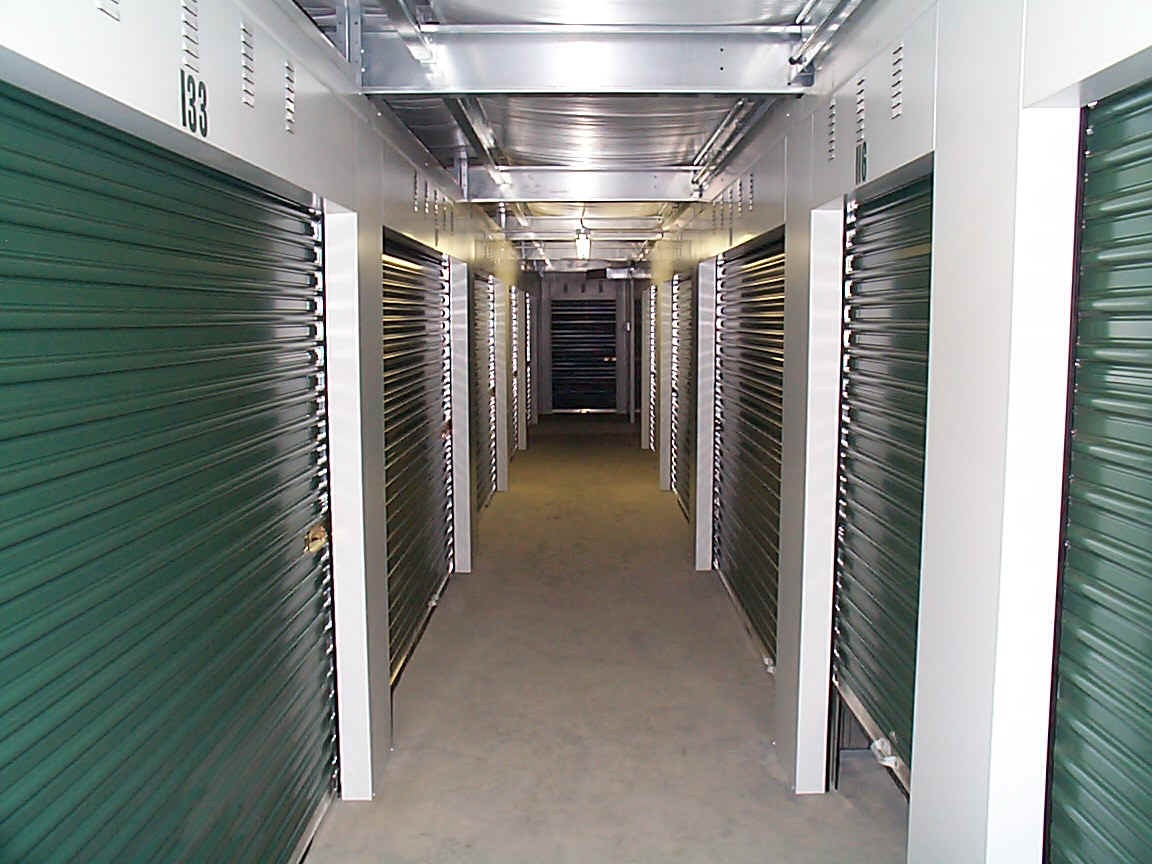
Why Climate Control Matters in California
Central Valley summers hit triple digits, winter mornings sit in damp Tule fog, and wildfire smoke drifts for days. Your stuff feels that. So what belongs in climate-controlled storage—and what’s fine in a standard unit? In Madera, we’ve seen comics curl at 108°F; in Reedley, leather crack; in Lemoore, electronics collect smoke and dust fast.
Think about your list: the guitar, photo albums, that leather sectional, the inventory you ship every week. Which ones survive a 105°F garage or a smoky harvest week? A Madera collector brought records to us after warping; a Reedley family saved a nursery set by moving early. Not sure? Call 559-664-3910 and we’ll steer you right.
Get storage wrong and you risk warping wood, cracked leather, moldy mattresses, corroded metal, and data loss in electronics—costs that pile up fast. Climate control reduces those swings. Next, we’ll show exactly what “climate-controlled” means here—temperature ranges, humidity balance, and cleaner airflow—so you can choose confidently for Madera, Reedley, or Lemoore.
What “Climate-Controlled” Really Means (Temp, Humidity, Filtration)
As promised, here’s what climate control actually means in California conditions: your unit sits inside an HVAC-managed space (heating, ventilation, and air conditioning) that keeps temperature and humidity steady. We typically aim for roughly 60–80°F with about 30–50% relative humidity. Those bands help stop wood and leather from warping, keep glues and finishes stable, and prevent mold and corrosion starting in the first place.
Think steady and comfortable, not freezer-cold or lab-sterile. Climate control manages both heat and moisture; simple temperature control only chases degrees and leaves humidity swings. Insulated interiors, sealed doors, and filtered, active airflow reduce spikes that crack veneers, craze finishes, and oxidize electronics. Want proof? Ask us about our temperature and humidity logs for your building. It won’t reverse existing damage, but it prevents most of it.In California’s Central Valley, 105–110°F heat waves, cool night drops, and winter Tule fog push materials hard. Interior, climate-controlled corridors add a clean buffer against wildfire smoke and agricultural dust, while slowing those rapid up-down swings. On the coast or during wet winters, balanced humidity helps stop mold before it starts. If you’re comparing climate-controlled storage in Madera, Reedley, or Lemoore, that indoor buffer matters.
Skip climate control here and the environment does the damage—warped wood in August, musty fabric by January, dust in every port after fire season. Next, we’ll show what goes wrong and why garages and standard units can’t keep up.
What Goes Wrong Without Climate Control in California
Hardwoods and veneers cup, crack, and separate; finishes craze into spiderweb lines. Electronics see condensation on cool mornings after hot days, then corrosion creeps under chips and connectors. Photographs and film emulsions soften and stick, vinyl records dish and ripple, and important documents curl at the edges before spotting with mold.
Leather dries and splits at seams, foams in mattresses trap moisture and turn musty, and adhesives let go on labels and laminates. Wood instruments lose tune and develop finish checking, while camera lenses invite dust into helicoids and grow fungus in humid swings. Battery packs swell, candles sag, and textiles hold smoky odors that never quite wash out.In Reedley, a family opened their storage boxes after a foggy winter to find photo albums wavy, some pages lightly stuck. In Madera, a small e‑commerce team watched product labels wrinkle and lift during a 108°F heat wave. In Lemoore, a musician’s guitars lived in a standard unit—tuning drifted weekly and the nitro finish began to check.
That damage adds up fast: a single warped dresser ($600–$1,200), retuning and repairs on instruments ($150–$400 each visit), ruined inventory runs ($1,000+ in returns), and weeks of downtime. Photo albums and heirlooms? Priceless—once stuck or spotted, you can’t replace the originals.
The Hidden Costs of “Good Enough” Storage
If those albums and heirlooms are priceless, why trust “good enough” fixes? Plastic totes trap moisture; silica packs saturate fast; moving blankets hold condensation; cardboard wicks from concrete. And drive‑up units? They bake at 100–120°F by day, then cool fast at night—prime conditions for warping and mold.
California piles on: back-to-back heat waves, smoky weeks, and 30–40°F daily swings overwhelm DIY (do-it-yourself) fixes and unconditioned spaces. Smoke particulates and ag dust (field dust) infiltrate boxes and ports; winter Tule fog feeds moisture. A garage or shed easily tops 110°F, then drops quickly—repeat that cycle for months.
The fix is purpose-built protection: indoor units that control temperature and humidity, with secure access and cleaner air. That’s the reliable way to stop damage before it starts.
The Reliable Fix: Climate-Controlled Storage by Master Storage 365
Our indoor, HVAC-managed (heating, ventilation, and air conditioning) buildings keep your unit in steady, comfortable ranges—typically about 60–80°F and balanced RH (relative humidity)—so wood, leather, photos, and electronics stay stable. You also get convenience built in: 24-hour access for late-night runs, keyless entry for shareable, trackable codes, and indoor loading that keeps you out of the heat. Free WiFi lets you check inventory apps or send a quick label without using cell data.
Because your unit sits behind interior corridors and sealed doors, dust and smoke intrusion drop dramatically compared to outdoor drive‑ups. Continuous airflow evens out hot spots, and insulation buffers heat spikes and winter moisture. For businesses, our extra‑large units can be customized—ask about shelving layouts, power needs, or simple workflow tweaks. Add peace of mind with good lighting, controlled access, and responsive local support. Net result: fewer returns, fewer headaches, and your stuff looks the same in six months as it does today.
- HVAC stability: Consistent temperature and humidity bands deter warping, mold, and corrosion
- Indoor protection: Buffer against heat spikes, moisture swings, dust, and wildfire smoke particulates
- 24/7 access: Convenient, secure entry any time for late nights or early jobs
- Keyless entry: Secure, trackable access codes—no physical keys to manage
- Extra-large units: Customizable layouts and options built around business workflows
- On-site perks: Free WiFi and optional mailing services for businesses
Browse our climate-controlled storage units to see sizes, live availability, and reserve in minutes for Madera, Reedley, or Lemoore.
Protect What Matters: Protect irreplaceable photos, instruments, and inventory through every California season. Check availability now and breathe easier tomorrow.
Quick Guide: Climate-Controlled vs. Standard Storage
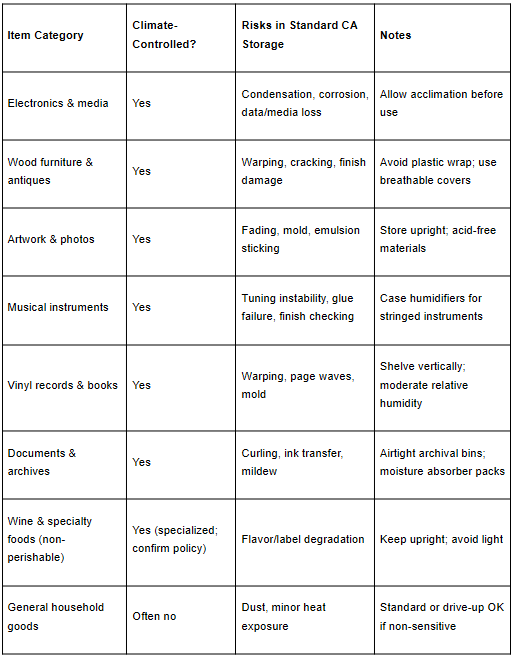
To breathe easier tomorrow, use this quick guide to decide what needs climate control in California, the risks in standard units, and our local notes for Madera, Reedley, and Lemoore. Think TVs, guitars, vinyl, photos, and everyday gear.
What to Store in Climate Control
Standard or drive-up works for your non‑sensitive items—but in California, these categories truly need climate control. Use this quick list to store them right and avoid damage. Up next, we’ll call out prohibited items and special handling rules.
- Electronics & smart home gear: Heat and humidity damage; seal against dust and let devices reach room temperature before powering.
- Heirloom wood furniture & antiques: Stable temperatures protect finishes and glues; use breathable covers and pad veneers to prevent lifting.
- Artwork, framed prints & photographs: Controlled humidity prevents mold; store upright with acid‑free sleeves, mats, and backing to stop sticking.
- Musical instruments & audio gear: Heat swings loosen glues and wreck tuning; climate control and hard cases keep them stable.
- Vinyl records, comics & books: Heat warps and waves; store vertically in cool, dark conditions and avoid tight plastic wraps.
- Business inventory & e‑commerce stock: Heat softens adhesives and packaging; climate control and 24‑hour access keep orders flowing, reduce returns.
- Documents, blueprints & archives: Moisture curls pages and smears inks; use archival bins with silica gel packs to control humidity.
- Wine & hobby collections: Stable temperatures preserve taste and labels; confirm specialized wine policies and avoid attics/garages.
What Not to Store (and Special Handling in California)If wine needs special policies, some items are flat-out prohibited. California fire and health rules drive these limits. Think gasoline cans or pet food. Scan this list, then we’ll match you with the right unit.
- No hazardous/flammables: fuels, gasoline, paints, paint thinner, fireworks, propane—per fire code
- No perishables or live items: food that spoils, pet food, plants, animals, insects
- No illegal/stolen goods: we comply with law enforcement and require lawful ownership
- Batteries & chem supplies: check with our office; many need approved containers or are restricted
- Engines & mowers: must be fully drained of fuel and cleaned; some types not allowed
- Scented items: use sealed bins; candles, soaps, or spices can attract pests even indoors
Choosing the Right Unit in California
Since you now know what not to store—and how to handle scented items—let’s match your list to the right unit. Use this simple checklist to align sensitivity, access, size, and budget without guesswork.
Step 1: Inventory:
Group by sensitivity—electronics, wood/leather, photos/media—versus durable items like tools or patio gear.
Step 2: Access Needs:
How often and when? 24-hour access helps night runs; businesses love shareable keyless entry.
Step 3: Size Planning:
Estimate cubic volume; leave a 2–3 ft aisle and room to grow.
Step 4: Location fit:
Weigh indoor climate control versus ground-level convenience based on item sensitivity.
Step 5: Budget View:
Compare rent to replacement costs; climate control often saves money by preventing damage.
Step 6: Reserve With Confidence:
Lock your rate online in minutes; adjust anytime before move-in.
Step 7: Move-In Timing:
Schedule cooler morning/evening hours; stage fragile items for first-row access.
If your list includes heavy tools, patio sets, or contractors’ supplies, our Drive-Up Storage Units are ideal for durable, non-sensitive items that need vehicle-side access and quick loading.
California-Proof Packing and Organization Checklist
With your unit chosen, climate-controlled or drive-up, let's pack it right. This checklist blocks California’s usual culprits: mold, warping, smoke, and dust. Follow it and your gear looks the same six months from now.
- Pro Tip: Use breathable cotton covers on wood/leather; skip plastic wrap that traps moisture.
- Avoid: Stacking heavy boxes on electronics; elevate gear on shelving or pallets.
- Label: Mark two sides; add QR (quick response) codes/notes for fast retrieval using Wi‑Fi (wireless internet).
- Buffer: Leave 1–2 inches from walls for airflow; keep a clear center aisle.
- Seal smart: Use gasketed bins for documents/photos; add desiccant packs as backup.
- Acclimate: Let electronics and instruments reach room temperature before powering or playing.
- Light & dust: Keep art and photos off the floor; covered shelving reduces dust.
- Visit quarterly: Do quick checks during heat and smoke season; adjust covers and desiccants.
- Secure: Use a quality disc lock even indoors; keep access logs via keyless entry.
- Plan exit: Stage soon-needed items near the door; keep heavier boxes low.
Local Wins: California Stories in Practice
You staged soon-needed items near the door—so what does success look like in real life? Two quick local snapshots: a creative pro and a retailer who used climate control and smart packing to protect gear, cut delays, and stay organized.
- Madera photographer: Cameras and archival prints stayed clean during smoke weeks and 108°F spikes in our climate-controlled unit. With 24/7 (all-day, every day) access, she grabbed gear for late edits and sunrise shoots. Result: zero damage and faster client turnarounds.
- Reedley boutique: Labeled apparel and cosmetics sat in climate control, so adhesives didn’t slip during heat waves. Shelving kept a tidy pick and pack zone. Outcome: fewer returns and faster shipping, with inventory counts done in minutes.
Where to Find Climate-Controlled Storage in California
If fewer returns and faster shipping sound like your goal, we’ve got you covered nearby. We serve Madera, Reedley, and Lemoore—close to Madera Ranchos, minutes from Downtown Reedley and the Kings River, and convenient to NAS Lemoore off Highway 198. Stop by for a quick tour.
- Madera address: 905 Knox Rd., Madera, CA 93638
- Phone: 559-664-3910 for questions and reservations
- Access: 24-hour access and keyless entry across climate-controlled units
- Business-ready: Extra-large, customizable units and mailing services
Reedley searchers: compare sizes and check live availability on our self storage units in Reedley CA page, then reserve in minutes. Prefer to talk? Call our Madera team for guidance. Questions before you book? Our FAQs are next.
California Climate-Controlled Storage FAQs
You asked for quick answers before booking—here they are. These California‑specific FAQs cover climate control, smoke and dust protection, sizing, pricing, 24/7 access, and move‑in timing so you can reserve with confidence while availability is still good.
What temperature and humidity do you maintain?
We maintain 60–80°F and 30–50% RH (relative humidity) year‑round with seasonal adjustments for Central Valley heat and winter moisture.
Do climate-controlled units filter smoke/dust?
Our indoor halls and filtered airflow reduce dust and smoke, but units aren’t cleanrooms. Use sealed bins for sensitive gear.
How do sizes compare to standard units?
We offer a similar size range as drive‑ups, with indoor corridors and elevators where available.
Is there a big price difference?
Climate control costs more, but it’s cheaper than ruined electronics or returns; seasonal promotions often narrow the gap significantly.
Can I access 24/7 and use keyless entry?
Yes. Your phone app or code opens doors and gates anytime; share codes with teammates or movers.
What insurance do I need?
We recommend tenant insurance and suggest checking your homeowners or renters policy for off‑premises coverage and limits.
How soon can I move in?
Reserve online in minutes and, when units are available, move in the same day with digital paperwork.
California: Ready to Store Smarter?
Reserve in minutes and, when units are available, move in today. We’ll protect what matters through Central Valley heat, winter fog, and wildfire smoke—without the hassle. Enjoy 24/7 access and keyless entry. We serve residents and businesses across Madera, Reedley, and Lemoore.
Summer heat and smoke weeks fill climate-controlled units fast. Lock yours now, or call 559-664-3910 for a two-minute sizing consultation. Need to see it first? Book a quick tour. Either way, you get clean, indoor protection and the freedom to grab inventory or gear anytime.