
California Storage & Moving Tips: Plan, Pack, Store, and Protect with Master Storage 365
Why California Moves Get Hard Fast
You’re ready to plan, pack, store, and protect—so why does a simple weekend move in Madera melt down at 104°F? By noon the tape lifts, cardboard softens, a candle bows, and your laptop throws a high-temperature warning. Traffic crawls on 99, wildfire haze hangs, and boxed electronics sit in a baking truck. Heat wins.
Now the plan slips. You reach Reedley at dusk, open a standard unit, and the air hits like an oven. Overnight thermal cycling (hot days, cooler nights that expand and contract materials) loosens adhesives; smoke particles sneak into fabric and paper. We see it every July—good packing, wrong conditions.
So why do standard moving tips fail under California’s heat, haze, and logistics—and how do you outsmart them?
Why California Storage Moves Are Different
Because the Central Valley’s heat, haze, and logistics rewrite the rules. In Madera, Lemoore, and Reedley, triple-digit stretches aren’t rare, and wildfire smoke/ash can linger July through October. Bay-to-Valley moves bring coastal humidity that condenses in sealed bins once you hit dry Valley air. Many HOAs (homeowners associations) require weekday elevator reservations and 2–3 hour windows. The result? You need climate control for sensitive items, dawn/dusk timing using 24/7 access, and smoke/dust-conscious packing.
Take a July Saturday: Madera at 106°F, Highway 99 slow, and an HOA elevator booked 1–3 p.m.—peak heat. Tape lifts, boxes soften, and movers watch the clock. Or a Bay-to-Reedley move where damp fabric sealed in totes turns musty overnight. Our local reality favors climate-controlled units, sealed-but-breathable covers, silica gel for paper/fabric, and schedule swaps to dawn/dusk. Keyless entry lets you coordinate helpers without passing keys, and on-site WiFi helps you inventory fast so doors stay closed longer.
Ignore these realities and you’ll meet melted adhesives, warped wood, mildew odors, missed elevator windows, and overtime mover fees—plus a weekend you’ll never get back.
The Five Failure Points in California Moves
After hundreds of Valley summers, we see the same patterns. If you fix these five, you prevent most damage and drama.
- Heat warp: 95–110°F spikes soften adhesives, bow veneer, warp vinyl and records, and bake finishes after hours in a hot truck.
- Humidity & ash: Bay-to-Valley moisture condenses in totes; wildfire particulates embed in fabric and paper, driving mildew, odor, and staining.
- Stacking stress: Heat-softened cardboard collapses under vertical load—bottom boxes crush, contents shift, corners crack.
- Timing misses: Missed HOA/elevator windows trigger rushed packing, corner dings, and dropped items under pressure.
- Banned/forgotten items: Fuels, large lithium batteries, and aerosols are unsafe or prohibited—fines, leaks, and fire risk follow.
This is where weekends vanish and budgets blow up—replacement costs, overtime invoices, and heartbreak over damaged heirlooms.
Why Quick Fixes Fail in California
Plastic totes “sweat” when hot days meet cooler nights—condensation forms inside and wicks into fabric. Cheap thrift locks seize in Valley dust or get bolt-cut in seconds. Tape fails on dusty cardboard because adhesives can’t bond; add a 105°F Fresno afternoon and highway vibration on 99, and flaps pop. Midday moves stack peak heat and slow traffic, so doors stay open longer and units heat up faster.
Common hacks backfire: Tight plastic wrap on wood traps moisture and clouds finishes. Electronics left in a non‑climate unit after lunch bake above safe temps, while ash sneaks in each door-open. A Santa Cruz-to-Reedley move brings moist air that condenses overnight in dry Valley conditions—hello mildew. Truck beds over hot asphalt can hit 130–140°F, compounding risk. The pattern is clear: the clock, materials, and unit type must work together.
So let’s use a California-tailored plan that aligns timing, heat-smart materials, and the right unit—so you move cooler, cleaner, and with fewer surprises.
California Storage Move Framework: Plan → Pack → Move-In
Our three-phase framework matches Valley reality. Plan around dawn/dusk windows and HOA schedules, choose climate control for heat/smoke-sensitive items, and pack for airflow and dust control. Then move in strategically—fast door cycles, smart aisles, and on-the-spot inventory.
Here’s the quick version you can screenshot and follow step by step.
Phase 1: Plan (7–10 days out):
Inventory by room, measure large items, schedule cooler-hour moves, and reserve elevator/dock access.
Phase 2: Pack (3–5 days out):
Use double-wall boxes, desiccant packs, edge protectors for glass, and color-code by room.
Phase 3: Move-In (Day-of):
Load heavy/rarely used items first, leave aisles, elevate on pallets, and photo-inventory for insurance.
Why Master Storage 36524/7 access lets you load at dawn or dusk, keyless entry simplifies crew coordination, and free WiFi makes labeling and inventory photos instant.
Choose The Right Unit, Fast
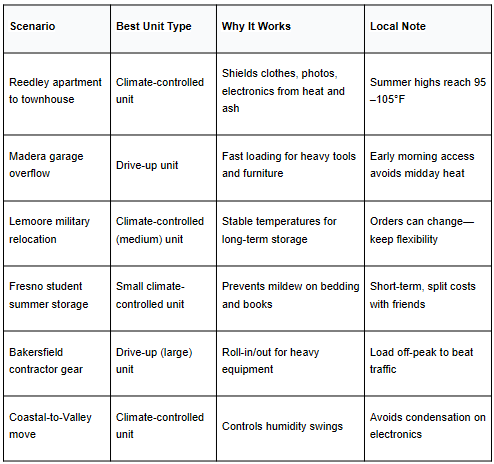
With 24/7 access, keyless entry, and WiFi covered, the next step is choosing the right unit. Read this matrix by balancing climate protection, drive-up access, and your move window. Climate control shields sensitive items; Drive-Up Storage Units speed heavy loads. Schedule dawn/dusk to cut heat exposure.
Protect Items From California Heat, Humidity, And Smoke
Now that you’ve matched your unit, here’s why the tactics matter: heat expands materials; cooldown contracts them, loosening glues and finishes. Dry air pulls moisture from wood and leather, causing cracks, while humidity feeds mold in paper and fabric. Smoke and dust lodge in fibers and vents, risking odors and corrosion in electronics.
If you want the safest option during peak summer, choose our climate-controlled storage units to stabilize temperature and filter air for sensitive items.
Use this quick checklist to preserve value in California conditions—then we’ll apply it room by room next.
- Elevate: Use pallets or risers to improve airflow and avoid slab moisture.
- Desiccants: Place silica gel packs in boxes and totes with fabrics and books.
- Breathable covers: Use cotton sheets or blankets over plastic to reduce sweating.
- Electronics prep: Use original boxes; remove batteries; label cables for faster reassembly.
- Smoke shields: Wrap textiles; add charcoal odor absorbers during wildfire season.
Room-By-Room Packing For California Heat And Smoke
You’ve got the climate checklist and smoke shields—now apply it room by room. Use this reference to pack right in Madera, Lemoore, and Reedley, and keep boxes under 30–40 lb in heat to prevent tape failure.
- Kitchen: Wrap glasses individually; pack plates vertically; avoid scented newsprint in heat; insulate wine; skip candles unless climate-controlled.
- Bedroom: Mattress bag with breathable cover; cedar blocks in closets; vacuum-seal everyday clothes for smoke/dust; avoid vacuum bags for down or leather.
- Living room: Store mirrors and art on edge with corner guards; pad TVs; never lay screens flat; vinyl upright in climate control.
- Garage/Tools: Drain fuel; wipe metal with light oil; strap and shrink-wrap tool chests; sealed bins over cardboard; cap sharp edges.
- Office/Electronics: Back up data; remove batteries; use anti-static bags; coil and label cables; original boxes if possible; climate control for valuables.
- Kids/Seasonal: Use clear bins for fast retrieval; photo-label for quick ID; place sports gear and holiday boxes near the front.
Cool-Hour Move-Day Playbook
You placed sports gear and holiday bins up front—now let’s choreograph move‑in so they stay reachable and safe. Early/late windows plus our 24/7 access reduce heat exposure, protect finishes, and keep everyone moving calmly.
5:30–7:30 AM: Pre-cool vehicle; hydrate; confirm keyless entry codes; stage heavy items near exit; set out dollies, straps, and blankets; quick stretch to prevent strains.
7:30–9:00 AM: Load sofas, appliances, and shelving first; keep fragile boxes out of sun; verify route against Highways 99/41 traffic; photograph contents of open totes before sealing.
9:00–10:00 AM: Arrive at unit; use 24-hour access to skip lines; crack door, wait 30–60 seconds to equalize temperature; place door-stops; stage climate-sensitive items first inside.
10:00–11:30 AM: Build a center aisle; elevate boxes on pallets; add shelving on walls; photograph layout; use free WiFi to sync inventory; face labels toward the aisle.
11:30–Noon: Stop for water and shade; avoid peak heat strain; confirm elevator/homeowners association (HOA) windows for the next run; set evening keyless permissions.
Evening option: Use 7–10 PM cool hours for a second run; 24/7 access reduces rush and mistakes; bring headlamps, reflective vests, and a cooler to keep everyone sharp.
Lock It In: Long‑term Security And Preservation
After that 7–10 PM run and the door clicks shut, lock in protection with simple habits. These California non‑negotiables keep heat, smoke, and dust from undoing your move‑day wins.
- Disc lock: Choose a stainless, shrouded, weather‑resistant model; avoid bargain combo locks. We cut cheap ones in seconds.
- Photo inventory: Snap aisle and box faces; store copies in cloud (Google Drive/Photos). Update after each visit—takes 2–3 minutes.
- Insurance: Verify homeowner/renter policies cover off‑site storage; add a rider for art, instruments, or jewelry. Photograph serial numbers.
- Maintenance loop: Quarterly, quick 10‑minute check—dust/ash sweep, rotate desiccants, test electronics, and inspect weatherstripping. In summer, make it monthly.
- Smart access: Share keyless codes only for the day; revoke when done. Use different codes for movers vs. family for clean logs.
Reedley Family Case Study: A Cooler, Damage‑free Summer Move
So what does smart access look like in real life? A Reedley family’s apartment lease ended in mid‑July, the forecast read 103°F, and the HOA (homeowners association) elevator window was 8–10 a.m. They called us worried about their piano, vinyl records, and boxes of photos. We set them up with a climate‑controlled unit, then split the move into cool windows: load 7–9 p.m., unload 6–8 a.m. Keyless entry let them share a temporary code with movers—no key handoffs. On‑site WiFi made a quick photo inventory simple. We paired sealed totes and silica gel with breathable furniture covers and mapped a center aisle so doors could close fast. Simple plan. Big difference.
Execution day felt calm. They pre‑staged outside, then rolled climate‑sensitive boxes in first, shelves up on the perimeter, and labels facing the aisle. The piano sat to acclimate in the climate unit before a final cover. By 9:30 a.m., everything was inside and the door closed. Results? Zero warping, no sticky finishes, and the photo boxes stayed odor‑free despite wildfire haze. They updated the inventory from their phones, revoked the movers’ code, and set a monthly summer check to refresh desiccants. School started two weeks later. No scramble. Just a smooth handoff to the new place.
Planning a similar move? Check current availability of self storage units in Reedley CA and reserve a climate‑controlled unit.
What Not To Store: California Rules And Safety
Before you reserve that unit, quick guardrails: these rules keep you safe, keep insurance valid, and comply with California fire code and sanitation standards. Not sure about an item? Call us before move‑in.
- Flammables: Gas, diesel, solvents, paint, propane. Fire code prohibits storage—fuel fumes + heat risk ignition.
- Explosives/Ammunition: Fireworks, primers, black powder, blasting caps. Detonation risk; not allowed by policy and state law.
- Perishables: Any food, pet kibble, or open pantry items. They attract pests and violate sanitation standards.
- Hazardous chemicals: Pesticides, corrosives, pool acid, industrial cleaners, and compressed gas cylinders. Leak, fire, and inhalation hazards.
- Live plants/animals: No living things. Heat, darkness, and no water make it unsafe and unlawful.
- Lithium batteries (loose): High thermal‑runaway risk. Keep within devices or remove per manufacturer guidance; do not store bulk spares.
Screenshot-Ready Moving Checklists
You’ve got the safety rules—no fuels, no loose lithium. Now screenshot these quick checklists and feel calm on move day.
- Planning (7–10 days): Reserve unit, book dawn/dusk slots, order supplies, secure elevator/dock, confirm insurance, line up helpers.
- Packing (3–5 days): Double-wall boxes, desiccants, edge protectors, room color-codes, weights under 40 lb, label cords, breathable covers.
- Move-in day: Build aisle, elevate on pallets/shelving, stage outside, fast door cycles, photo-inventory, lock check, hydrate/rest plan, revoke temporary access.
Checklists ready? Need help choosing a unit?
How We Can Help
Unsure on size or climate vs. standard? Call 559-664-3910 and we’ll match your items to the right unit. We’ll factor 24/7 access (anytime entry), keyless entry, and climate control so your move lands cooler and cleaner.
You’re ready to find a storage unit near you—let’s lock it in. Reserve online in Madera, Lemoore, or Reedley, or call 559-664-3910 for quick help. Our climate-controlled units protect electronics, photos, art, and vinyl, while 24/7 access lets you load at dawn or after dark. Keyless entry keeps your crew coordinated without key handoffs. Free WiFi supports on-the-spot inventory. Need business support? We also offer mailing services and extra-large, customizable units. Move cooler. Protect more.
Units are available in Madera, Lemoore, and Reedley today. Not sure on size or timing? Tell us what you’re storing and your dates, and we’ll match the right unit with a clear plan—aisle layout, pallets, and cooler-hour scheduling. Prefer to see it first? Book a quick tour and compare climate control, 24/7 access, keyless entry, free WiFi, and mailing services in person. Call 559-664-3910 and reserve in minutes.