
How to Organize a Storage Unit Like a Pro | Master Storage 365
How to Organize a Storage Unit Like a Pro | Master Storage 365
John
July 1st, 2026
How to Organize a Storage Unit Like a Pro
You rent a storage unit, toss everything inside, and slam the door shut. Three months later, you need one specific box. You open the unit and stare at a wall of cardboard with no labels, no walkway, and no idea where anything is. Sound familiar?A disorganized storage unit wastes your time, damages your belongings, and turns every visit into a frustrating scavenger hunt. Boxes get crushed. Fragile items break. That winter coat you need? Buried behind a mattress you can't move alone.Learning how to organize a storage unit the right way prevents all of that. With a solid plan, the right packing materials, and a simple layout strategy, you can protect your stuff, find anything in minutes, and actually use the space you're paying for.This guide walks you through the entire process step by step, from choosing the right unit size to building a layout, packing efficiently, labeling everything, and avoiding the most common mistakes renters make. Whether you're storing a few seasonal items or the contents of an entire apartment, these storage unit organization tips will save you time, money, and a lot of headaches.
Plan Your Storage Unit Layout Before You Start Packing
The biggest mistake people make? Showing up with a truckload of boxes and no plan. Before you move a single item into your unit, sketch out a rough layout on paper or on your phone.Think of your unit like a small room. You need zones for different categories of items, a clear path so you can reach things in the back, and a logical order that puts heavy, rarely used items at the bottom and back while keeping everyday essentials near the front.Here's a quick planning checklist:
- Measure your items. Know the dimensions of your largest furniture pieces so you can plan where they'll go.
- Decide on access frequency. Items you'll grab monthly go near the door. Seasonal gear goes toward the back.
- Map out a walkway. Leave at least 2 to 3 feet of aisle space down the center or along one side.
- Plan for vertical space. Most units have 8 to 10 foot ceilings. Use that height.
Choosing the Right Storage Unit Size
An oversized unit wastes money. An undersized unit forces you to cram items in without any organization. Getting the size right is the first real step toward a well-organized space.Here's a general breakdown:
- 5x5 unit (25 sq ft): Small closet. Good for a few boxes, seasonal decorations, or sports equipment.
- 5x10 unit (50 sq ft): Walk-in closet. Fits a small bedroom's worth of furniture plus boxes.
- 10x10 unit (100 sq ft): Standard bedroom. Holds the contents of a one-bedroom apartment.
- 10x15 unit (150 sq ft): Large bedroom. Fits a two-bedroom apartment or small home.
- 10x20 unit (200 sq ft): One-car garage. Handles a full house or business inventory.
When in doubt, go one size up. That extra space gives you room for walkways and proper organization. Check out our storage unit size guide for a detailed breakdown of what fits in each unit.Keep in mind that unit sizes and availability may vary by location across our Reedley, Madera, and Lemoore facilities.
How to Organize a Storage Unit: A Step-by-Step System
A clear system turns chaos into order. Follow these steps before and during your move-in, and you'll thank yourself every time you visit.
Step 1: Sort Items by Category
Before anything goes in the truck, group your belongings into categories: kitchen items, bedroom items, holiday decorations, sports gear, documents, electronics, and so on. This makes it much easier to create zones inside your unit and find things later.
Step 2: Group Items by How Often You'll Need Them
Separate everything into three groups:
- Frequent access (monthly or more): seasonal clothing swaps, business inventory, hobby equipment.
- Occasional access (a few times a year): holiday decorations, tax documents, camping gear.
- Rare access (once a year or less): keepsakes, archived records, furniture you're storing long term.
Frequent-access items go near the door. Rare-access items go against the back wall.
Step 3: Create Zones Inside the Unit
Assign specific areas for each category. For example, the left wall holds furniture. The right side holds stacked boxes by room. The back corner stores holiday decorations. The front-right section holds items you'll grab regularly.Zones eliminate guesswork. You'll know exactly where to look every time.
Step 4: Build a Walkway for Access
Never pack a unit wall to wall. Leave a pathway at least two feet wide running from the door toward the back. In larger units, consider a T-shaped or L-shaped path so you can reach items along the side walls too.
Step 5: Place Heavy Items First
Load the heaviest, sturdiest items first. Dressers, bookshelves, appliances, and large boxes go on the floor along the back and side walls. These pieces form the foundation for stacking lighter items on top.
Step 6: Store Delicate Items Safely
Wrap mirrors, glass, and framed artwork in bubble wrap or moving blankets. Store them vertically between mattresses or furniture pads. Never stack heavy boxes on top of fragile containers. Mark these boxes clearly with "FRAGILE" on all sides.
Step 7: Stack Smart with Shelves
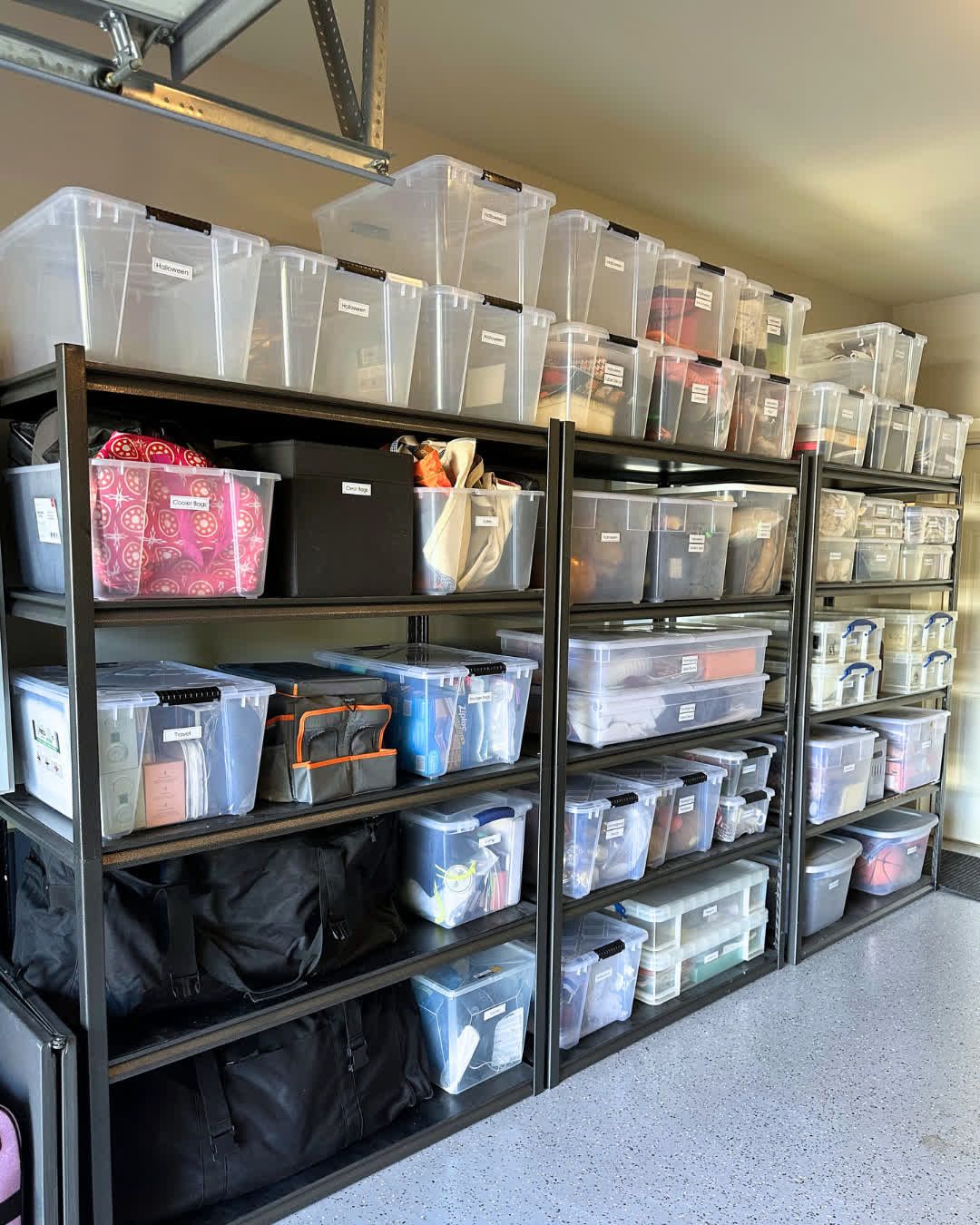
Freestanding shelving units are one of the best storage unit hacks available. Even two or three inexpensive metal shelf units along one wall will double your usable space and keep everything visible and accessible.Stack boxes with the heaviest on the bottom and lightest on top. Keep all stacks below eye level if possible so nothing topples when you open the door.
The Best Way to Pack a Storage Unit
How you pack is just as important as where you place things. Smart packing protects your items, saves space, and keeps everything accessible.
Use Uniform Box Sizes
Random box sizes create unstable stacks and wasted gaps. Stick to two or three standard sizes: small boxes for heavy items like books, medium boxes for kitchen and bathroom items, and large boxes for lightweight things like linens and pillows.
Clear Bins vs. Cardboard Boxes
Clear plastic bins cost more upfront, but you can see the contents without opening them. They're also moisture-resistant and stackable. Use them for items you'll access frequently. Cardboard works fine for long-term, rarely touched storage, just keep boxes off the ground on pallets or shelves.
Strategic Weight Distribution
Pack heavy items in small boxes so they're manageable to lift. Fill gaps in boxes with packing paper or towels to prevent shifting. Never stack more than three cardboard boxes high unless they're uniformly sized and packed firmly.
Furniture Placement
Disassemble bed frames, tables, and shelves when possible. Store table legs, bolts, and hardware in labeled bags taped to the furniture they belong to. Stand sofas on end to save floor space. Place mattresses in protective covers and store them vertically against a wall.
Protective Coverings
Use furniture pads, moving blankets, and mattress bags. Avoid plastic sheeting directly on wood furniture, as it traps moisture and can cause warping or mold. Cotton drop cloths let furniture breathe while staying protected from dust.
Leave Space for Airflow
Don't push items flush against the walls. Leave one to two inches of breathing room on all sides for air circulation. This is especially important in units without climate control, where temperature swings can create condensation.
How to Organize a 10x10 Storage Unit
The 10x10 unit is the most popular size for individual renters. It's roughly the size of a standard bedroom, about 100 square feet, with enough room for a one-bedroom apartment's worth of belongings. But that space fills up fast if you don't have a plan.Here's how to organize a 10x10 storage unit so every square foot counts:
Sample 10x10 Layout
Picture the unit as a grid. Place large furniture (dressers, bookshelves, desks) along the back wall and one side wall. Stack boxes in columns along the opposite side wall, organized by category with labels facing outward. Leave a 2-foot-wide walkway down the center running from the door to the back.
Vertical Stacking Strategies
With standard 8 to 10 foot ceilings, you can safely stack to about 6 feet. Place a shelving unit along one wall to organize smaller boxes, tools, and loose items. Stack uniform bins on top of each other in stable columns. Use the tops of dressers and desks as extra shelf space for lighter boxes.
Furniture Placement Tips
- Stand couches vertically on one end to free up floor space.
- Slide mattresses vertically against the back wall in a mattress bag.
- Nest smaller items inside dressers, appliances, and hollow furniture.
- Remove table legs and store them flat against the wall.
Keeping Items Accessible
Place a small table or shelving unit just inside the door as a "landing zone" for items you grab often. Keep a flashlight, box cutter, and inventory list in a small bin near the entrance. If you visit weekly, reserve the front 2 to 3 feet for rotating inventory or seasonal items.
Labeling and Inventory Tracking
A perfectly packed unit is useless if you can't find anything. Good labeling takes 10 extra minutes during packing and saves hours later.
Numbered Box System
Assign every box a number. Write the number on all four sides and on top. Keep a master list (digital or paper) that maps each number to its contents. Box #14: kitchen utensils, spatulas, measuring cups. Box #27: winter jackets, scarves, gloves.
Color-Coded Labels
Use different colored stickers or tape for each room or category. Blue for bedroom, red for kitchen, green for garage items, yellow for holiday decorations. You'll spot the right box from across the unit without reading a single label.
Room-by-Room and Priority Labeling
Write both the room name and a priority level on each box. "Kitchen, Open First" or "Guest Bedroom, Low Priority." When you eventually unpack, this system tells you exactly what to grab and in what order.
Digital Inventory Options
For larger storage projects, digital tools make tracking simple:
- Spreadsheet: A basic Google Sheet with columns for box number, contents, category, and location in the unit.
- QR codes: Print QR codes linked to your spreadsheet rows and tape one to each box. Scan with your phone to instantly see what's inside.
- Inventory apps: Apps like Sortly, Encircle, or BoxItemize let you photograph contents, assign categories, and search your inventory from anywhere.
Maximizing Vertical Space
Most renters only use the bottom half of their unit. That's like paying for a two-story house and only living on the ground floor. Vertical space is your best friend for organization.
Shelving Units
Freestanding metal or plastic shelving is the single best investment for storage unit organization. Place units along walls to create organized rows of bins and boxes. Choose adjustable shelves so you can customize the height for different items.
Safe Stacking Heights
Keep stacks no higher than 6 feet for safety. Place the heaviest, sturdiest boxes at the base. Never stack cardboard boxes more than four high, as the bottom box will eventually crush under the weight. Plastic bins hold up better for taller stacks.
Vertical Furniture Storage
Mattresses, headboards, table tops, and mirrors can all be stored vertically, leaning against walls. This frees up significant floor space. Just make sure vertical items are secured so they can't slide or fall.
Hanging and Wall-Mounted Solutions
If your facility allows it, hanging shoe organizers on the backs of shelving units work great for small tools, craft supplies, or hardware. Over-the-door hooks (placed on shelving frames) hold bags, extension cords, or sports equipment off the floor.
Uniform Bins Create Stable Stacks
Same-size bins interlock when stacked, creating solid columns that won't shift. Invest in a set of matching heavy-duty bins for your most important items. The upfront cost pays for itself in organization and protection.
Organizing Frequently Used Items
If you visit your unit regularly for business inventory, seasonal gear, or hobby supplies, set up the front section specifically for quick access.
- Keep a clear zone just inside the door, about 3 feet deep, for rotating items.
- Use open-front bins or labeled clear containers so you can identify contents instantly.
- Place a small folding table near the entrance for sorting or repacking during visits.
- Store a step stool in the unit for reaching items on higher shelves safely.
For business owners managing inventory from a storage unit, drive-up storage units make frequent loading and unloading much faster. You can park right at your door, which is a major time-saver compared to hauling boxes down hallways.
Why Drive-Up Storage Units Are Ideal for Frequent Access
If you're organizing a storage unit that you plan to visit often, the type of unit matters just as much as how you pack it. Drive-up units offer garage-style access where you can pull your vehicle right up to the roll-up door.This setup is especially useful for:
- Business inventory: Restock or rotate products without carrying boxes through building corridors.
- Seasonal storage: Swap holiday decorations, patio furniture, or sports equipment with minimal effort.
- Moving projects: Load and unload large furniture directly from a truck or van.
- Frequent access needs: Any situation where you're visiting weekly or biweekly.
At Master Storage 365, our drive-up units are available at our storage units in Reedley, Madera storage facility, and Lemoore storage units, with 24/7 access and smartphone-enabled keyless entry.
When to Choose Climate-Controlled Storage
Organization is only half the equation. If you're storing items sensitive to heat, humidity, or temperature swings, a climate-controlled unit keeps them safe year-round.Climate-controlled storage is especially important for:
- Electronics: Computers, TVs, and audio equipment are vulnerable to heat and moisture.
- Documents and photos: Paper yellows, warps, and molds in fluctuating conditions.
- Wood furniture: Temperature changes cause wood to expand, crack, and warp.
- Clothing and textiles: Fabric absorbs moisture, leading to mildew and odor.
- Antiques and collectibles: Irreplaceable items deserve the most stable environment possible.
In California's Central Valley, summer temperatures regularly exceed 100°F. Storage solutions in Reedley, self-storage in Madera, and organized storage options in Lemoore all benefit from climate control, especially during peak summer and damp winter months.
Long-Term Storage Organization Tips
If your items will sit in storage for six months or longer, a few extra steps will keep everything in good condition.
- Elevate boxes off the floor. Use pallets, 2x4 lumber, or the bottom shelf of a shelving unit. This protects against moisture and minor flooding.
- Use desiccant packets. Toss silica gel packets into boxes with clothing, documents, and electronics to absorb excess moisture.
- Cover furniture with cotton sheets. Avoid plastic tarps, which trap humidity. Cotton breathes and still blocks dust.
- Drain all fluids. Empty lawnmower gas tanks, remove batteries from electronics, and drain water from hoses or coolers.
- Schedule periodic visits. Check on your unit every two to three months. Look for signs of moisture, pest activity, or shifting stacks.
- Update your inventory. Every time you add or remove items, update your master list. An outdated inventory is almost as bad as no inventory at all.
Common Storage Unit Organization Mistakes to Avoid
Even people with good intentions end up with a disorganized unit. Here are the mistakes to watch for:
- No walkway. Packing wall to wall means you'll have to unload half the unit to reach one box in the back.
- Unlabeled boxes. "Miscellaneous" is not a label. Be specific. Future you will appreciate it.
- Ignoring weight distribution. Heavy boxes on top of light ones creates crushed items and unstable stacks.
- Using garbage bags for storage. Bags tear, don't stack, and offer zero protection. Use proper boxes or bins.
- Skipping the inventory list. Relying on memory is a losing strategy, especially over months or years.
- Storing prohibited items. Perishable food, flammable liquids, and hazardous materials don't belong in a storage unit. Check your facility's rules.
- Overpacking boxes. A 50-pound box is hard to lift, easy to drop, and likely to break. Keep boxes under 30 to 40 pounds.
- Forgetting airflow. Items pushed directly against walls with no ventilation can develop mold, especially in non-climate-controlled units.
Frequently Asked Questions
What is the best way to organize a storage unit?
Start by sorting items into categories and grouping them by how often you'll need them. Create zones inside the unit, leave a walkway for access, and use shelving to maximize vertical space. Label every box on multiple sides and keep a digital or paper inventory. Place rarely used items at the back and frequently accessed items near the door.
How do you maximize space in a storage unit?
Use uniform box sizes so stacks are stable and gap-free. Take advantage of vertical space with shelving units and stack to a safe height (about 6 feet). Disassemble furniture when possible and store pieces vertically. Nest smaller items inside drawers, appliances, and hollow furniture. Use every cubic foot, not just the floor space.
Should you leave a walkway in a storage unit?
Absolutely. A walkway (at least 2 feet wide) running from the door into the unit is essential. Without one, you'll need to unstack and move items every time you need something from the back. The small amount of floor space you lose is worth the time and frustration you save on every visit.
What size storage unit is easiest to organize?
A 10x10 unit hits the sweet spot for most people. It's large enough to hold meaningful furniture and boxes but small enough that you can see and reach most areas without much effort. It's roughly the size of a bedroom, which makes it easy to mentally map out and organize into zones. For help choosing, check our storage unit size guide.
Keep Your Storage Unit Organized with Master Storage 365
Now that you know how to organize a storage unit from top to bottom, the next step is finding the right space to put that plan into action. At Master Storage 365, we offer a range of unit sizes, drive-up and climate-controlled options, and modern security features including 24/7 access, smartphone keyless entry, and surveillance cameras at every facility.Whether you need storage solutions in Reedley for a home renovation, a self-storage unit in Madera for business inventory, or organized storage options in Lemoore for a seasonal cleanout, we have the space and the tools to help you stay organized.Ready to find your perfect unit? Explore our available sizes and reserve your unit online today. Our team is happy to help you pick the right fit for your needs.
How to Organize a Storage Unit Like a Pro | Master Storage 365