
When Do You Need an Extra Large Storage Unit?
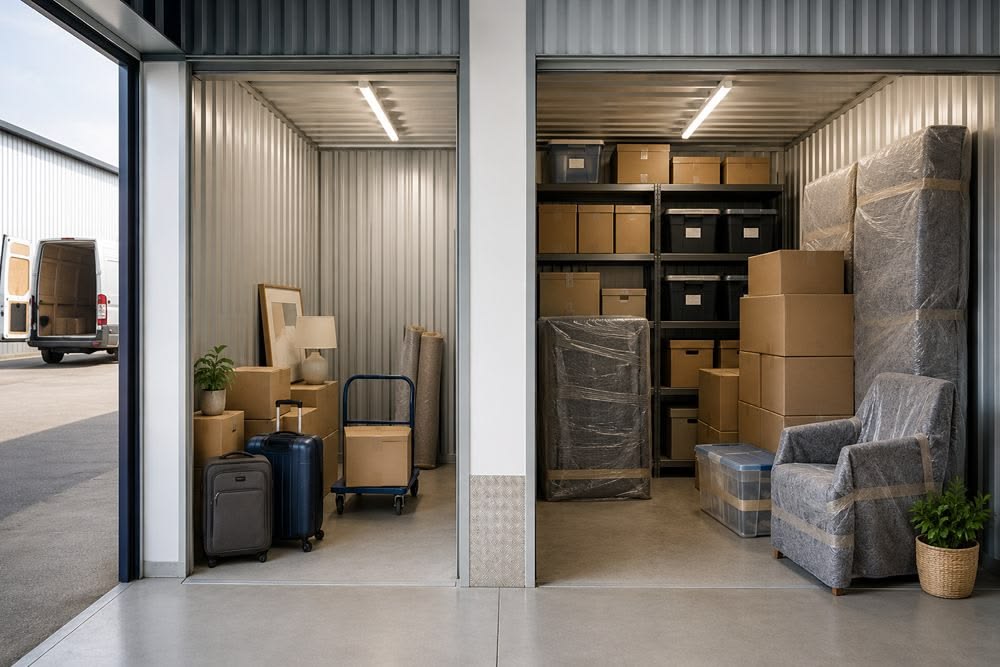
Most people rent a 5x5 or 10x10 and never think about size again. But there's a point where a standard unit stops making sense: when you're stacking boxes to the ceiling, parking a vehicle sideways to make room, or paying for a second unit because the first one filled up. That's the moment large storage units start to pay for themselves.
The tricky part is knowing when you've crossed that line. A single garage's worth of belongings fits in a 10x15. A whole house full of furniture usually doesn't. This guide walks through eight real situations where oversized storage units are the smarter call, how the common sizes compare, and when renting big storage beats leasing warehouse space outright.
8 Situations That Call for a Large Storage Unit
1. A Whole-House Move
Relocating a three or four-bedroom home means beds, dressers, couches, a dining set, appliances, and dozens of boxes all landing at once. A 10x20 holds roughly the contents of a two or three-bedroom house; anything larger, or a home with a garage full of tools and outdoor gear, pushes you toward a 10x30 or a flex unit. Having one space that fits everything beats splitting your life across two units on opposite ends of a hallway.
2. An Estate Cleanout
Clearing a family home after a loss or a downsizing move rarely happens on a tidy schedule. You need somewhere to hold furniture, keepsakes, and boxes while relatives sort through what stays, sells, or gets donated. Extra large units give the family room to work without rushing, and drive-up access makes it easy to move heavy pieces in and out over several weeks.
3. Farm and Ranch Equipment
Central California's ag country runs on equipment that doesn't fit in a shed: tractors, tillers, ATVs, trailers, irrigation gear, and seasonal implements you only need part of the year. A tall roll-up door and a wide, deep unit let you drive equipment straight in and protect it from sun and dust between seasons instead of leaving it exposed in a field.
4. Construction Contractors
Contractors carry materials and tools that outgrow a truck bed fast: lumber, scaffolding, tile, fixtures, compressors, and job-site equipment between projects. A large unit acts as a rolling supply depot. You stage materials, load up in the morning, and restock at day's end, all without renting a shop you only half use.
5. E-Commerce and Small Business Warehousing
Online sellers hit a wall when the spare room and garage overflow with inventory. Before signing a warehouse lease, many turn to a storage unit for small business inventory, packing supplies, and returns. With shelving, lighting, and power, an oversized unit becomes a low-cost fulfillment base you can walk into daily. See our breakdown of large units for business inventory for how sellers structure the space.
6. Classic Car and Vehicle Collections
A single project car might fit in a 10x20, but collectors with multiple vehicles, a boat, or an RV need width and height a standard unit can't offer. A 12x30 or larger flex unit fits a car plus tools, parts, and a workbench, so restoration doesn't stall for lack of room. Enclosed storage also keeps paint, chrome, and upholstery out of the valley heat.
7. Church and Nonprofit Overflow
Congregations and community groups accumulate folding tables, chairs, holiday decor, event equipment, and donation stock that clutters closets and back rooms. An extra large unit consolidates all of it into one accessible place volunteers can reach whenever they set up for the next event, without renting a second building.
8. Seasonal Business Inventory
Landscapers, pool companies, tax preparers, and holiday retailers all deal with stock that surges and shrinks through the year. Rather than paying year-round for peak-season space, a large unit scales with the calendar: patio sets and coolers in summer, decor and gift stock in winter. You store what you're not selling and keep your showroom or shop floor open.
Size Comparison: 10x20 vs 10x30 vs Flex Units
Knowing the situation is half the answer. The other half is matching it to a size. Here's how the three most common large options stack up:
- 10x20 (200 sq ft): About a one-car garage. Holds a two to three-bedroom home, several major appliances, or a single vehicle with room to spare. The entry point for large storage.
- 10x30 (300 sq ft): Roughly a one-and-a-half car garage. Fits a four to five-bedroom home, a vehicle plus household goods, or a serious inventory load. This is where huge storage units start to feel like real square footage.
- Flex units (12x30 up to 30x30, roughly 360 to 900 sq ft): Wide, tall, drive-up spaces built for business. At 900 sq ft, a 30x30 approaches 1000 sq ft of storage space for rent, the scale where you'd otherwise be shopping for warehouse bays. Add lighting, power, and shelving and it works as a genuine operating space.
Not sure which end of the range fits your load? Our unit size guide maps common belongings to square footage so you can size up before you rent, not after.
Large Storage Unit vs Renting Warehouse Space
Once you're past 500 sq ft, the honest comparison isn't against a smaller unit; it's against leasing a warehouse. This is where large storage facilities win for most homeowners and small businesses.
A commercial warehouse lease typically locks you into one to three years, adds triple-net costs like taxes, insurance, and maintenance, and often requires a build-out before you can move in. A flex storage unit is month-to-month. You pay one rate, walk in the day you sign, and leave when your needs change without breaking a contract.
For a seasonal or growing business, that flexibility is the whole point. You scale up a unit size during your busy months and scale back down after, something no landlord will let you do mid-lease. The benefits of extra large units add up fastest for anyone who can't predict exactly how much space they'll need six months out.
When you're ready to compare specific dimensions and pricing, our flex extra large storage units page lists every size with the features businesses ask about most: roll-up doors, dedicated electricity, individual lighting, and web-enabled security cameras.
Where to Find Large Units Near You
Master Storage 365 offers large and extra large unit options across all three of its central California locations. Whether you need to stage a whole-house move or warehouse seasonal inventory, you can rent nearby at Madera storage, Reedley storage, or Lemoore storage. Each site offers drive-up access and month-to-month terms, so you can match the unit to the job without a long-term commitment.
Frequently Asked Questions
What is considered an extra large storage unit?
Anything from 10x20 (200 sq ft) up is generally treated as a large unit, and flex units from 12x30 to 30x30 fall into the extra large or oversized category. At the top end you're looking at roughly 900 sq ft, close to a small warehouse bay.
How much can fit in a 10x30 storage unit?
A 10x30 holds the contents of a four to five-bedroom home, including large appliances and boxes, or a vehicle plus a full household load. It's also enough for a substantial small-business inventory with shelving.
Is a large storage unit cheaper than renting warehouse space?
For most small businesses and homeowners, yes. A flex unit is month-to-month with one flat rate and no build-out, while a warehouse lease usually means a multi-year commitment plus taxes, insurance, and maintenance costs on top of rent.
Can I store a vehicle and belongings in the same unit?
Yes. A 12x30 or larger flex unit fits a car, boat, or RV alongside tools, parts, and boxes, which makes it a common choice for collectors and anyone combining a vehicle with a household or business load.