
RV, Boat, and Motorcycle Storage Tips for California Owners
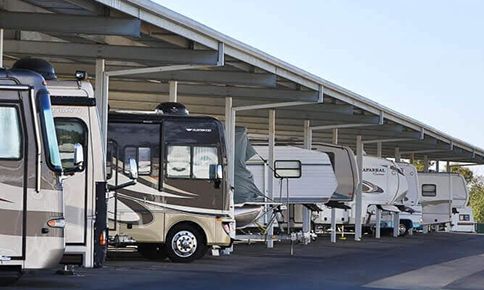
Storing a recreational vehicle in California isn't the same job as tucking a daily driver into a unit for a few months. An RV holds water in its tanks, a boat traps moisture in the bilge, and a motorcycle's small battery drains faster than most people expect. The Central Valley adds its own pressure: dry summers push cabin temperatures past 120°F, and winter brings enough damp overnight fog to grow mildew on an uncovered seat. This guide covers prepping and storing each vehicle type, with the seasonal steps that matter most in a hot inland climate.
If you're deciding between vehicle types entirely, our separate guide to car storage unit sizing covers passenger cars in detail. This article sticks to the bigger, seasonal machines.
RV Storage Tips and Prep
An RV that sits for months without prep comes back with problems you'll pay for later: a swollen fridge seal, a cracked water line, or a black tank that never smells right again. Handle the fluids and seals before you park it.
Draining and Winterizing the Water System
Valley overnight lows in December and January dip near freezing often enough to split a water line. Drain the fresh, gray, and black tanks completely, then run RV antifreeze through the lines until it shows pink at every faucet. Bypass and empty the water heater first so you're not wasting antifreeze filling a six-gallon tank.
Summerizing matters just as much here. Before a hot layup, leave roof vents cracked and add a moisture absorber, because a sealed RV baking at 120°F will cook adhesives and warp vinyl. A breathable cover beats a tarp, which traps heat and sweats condensation against the paint.
Battery and Fluids During Storage
Disconnect both the chassis and house batteries, or pull them entirely and keep them on a trickle charger at home. A house battery left connected to propane detectors and clocks will flatten in six to eight weeks. Top off the fuel tank and add a stabilizer so ethanol-blended gas doesn't gum the injectors, and change the oil before storage rather than after, since used oil holds acids that pit engine internals while it sits.
Where to Park a Large RV
Class A and larger Class C rigs rarely fit a standard enclosed unit, which is where oversized storage units come in. For owners in Kings County, Lemoore storage with RV parking gives you a secured lot minutes from Highway 198, so you're not leaving a motorhome baking in a driveway or violating an HOA rule.
Boat Storage Tips and Prep
Boats punish neglect faster than any other stored vehicle because water gets everywhere. The goal is to get every drop out and keep new ones from finding their way in.
Draining, Flushing, and Fogging
Pull the drain plug and leave it out for the whole storage period so rain and condensation drain instead of pooling. Flush the cooling system, then fog the engine cylinders through the spark plug holes or intake to coat the internals against corrosion. In the Valley this is your winterization step, since the risk here is a trapped-moisture freeze crack rather than a hard freeze on the water.
Battery, Fuel, and Fabric
Remove the battery and store it off concrete on a maintainer. Fill the fuel tank to about 95 percent and add stabilizer, leaving room for expansion in summer heat. Wipe down and dry all vinyl seating, because Valley humidity swings will grow mildew on any surface stored damp. Support the cover with a frame or poles so it sheds water and air can move underneath, rather than letting it sag onto the gel coat.
Trailer Considerations
Grease the wheel bearings and set the trailer on jack stands or blocks to take weight off the tires, which develop flat spots when loaded and stationary for months. A drive-up storage unit for easy loading makes backing a trailer in and out far simpler than threading through an interior corridor.
Motorcycle Storage Tips and Prep
Motorcycles are small enough that owners tend to underestimate them, then discover a dead battery and gummed carbs come spring. A little prep keeps the bike ready to ride.
What Size Storage Unit for a Motorcycle
A single motorcycle fits comfortably in a 5' x 10' unit, roughly 50 square feet, which leaves room for a jack, cover, and a shelf of gear. Two bikes or a bike plus a small workbench fit better in a 5' x 15' or 10' x 10'. If you're storing a touring bike with a trailer, or a bike alongside other gear, step up to a larger drive-up space so you're not squeezing past hot pipes.
Battery, Fuel, and Fluids
Put the battery on a tender, since a small motorcycle battery can discharge in three to four weeks and rarely survives a full drain. Fill the tank and add fuel stabilizer, then run the engine a few minutes so treated fuel reaches the carbs or injectors. Change the oil before storage to clear out combustion acids, and give the chain a fresh coat of lube to stop surface rust.
Tires, Cover, and Ventilation
Get both tires off the ground with a stand if you can, or at least over-inflate slightly and move the bike every few weeks to avoid flat spots. Use a breathable indoor cover rather than plastic, and never seal a warm exhaust under a cover. In an enclosed unit, a small vent gap and a moisture absorber keep condensation off the chrome.
Security Checklist for Vehicle Storage
Recreational vehicles are theft targets precisely because they sit unused for long stretches. Run through this list before you walk away:
- Disc lock or chain on motorcycles, plus a coupler lock on any trailer so it can't be hitched and towed.
- Wheel or steering lock on RVs and larger tow vehicles.
- Remove valuables and electronics such as GPS units, stereos, and registration papers.
- Photograph the vehicle and record the VIN before storage so you have documentation if you ever need it.
- Choose a facility with 24/7 monitoring and gated access rather than street or open-lot parking.
- Confirm coverage. A stored vehicle usually needs its own policy, and vehicle storage insurance fills gaps that a lapsed auto policy leaves open.
Master Storage 365 offers gated, monitored facilities with keyless smartphone entry across its California locations. Owners further north can look at Reedley storage for the same security setup closer to Fresno County.
Choosing the Right Unit Size
Match the space to the machine and leave room to walk around it. A motorcycle needs about 50 square feet, a small boat and trailer around 200, and a full-size RV needs an oversized or open parking space measured to its length plus a few feet for the hitch. When in doubt, size up: a tight unit makes covering, ventilating, and maintaining the vehicle a fight every visit.
Frequently Asked Questions
How often should I start a stored RV or boat engine?
Once a month is a common habit, but idling briefly can do more harm than good by leaving unburned fuel in the oil. If you can't take it for a real drive or run it up to full temperature, it's better to prep it properly with stabilizer and a battery tender and leave it alone.
Do I need to winterize in California's Central Valley?
Yes for water systems. Valley overnight lows in December and January regularly touch freezing, which is enough to crack a water line or engine block. The bigger year-round enemy is trapped moisture and summer heat, so ventilation and moisture absorbers matter in every season here.
What size storage unit do I need for a motorcycle?
A single bike fits a 5' x 10' unit with room for gear. Two bikes or a bike with a workbench are better suited to a 5' x 15' or 10' x 10'.
Can I keep the battery in the vehicle during storage?
Only if it's on a maintainer. Left connected to a vehicle's parasitic draw, an RV house battery lasts six to eight weeks and a motorcycle battery three to four before it discharges too far to recover.
Is a tarp good enough as a cover?
No. Tarps trap heat and sweat condensation against paint and gel coat. Use a breathable cover made for the vehicle and support it so air moves underneath.